Tiger Print - 24oz Venti Cup Hole Wrap SVG: Craft & Graphics Review
First Look at a Wild Graphic Asset
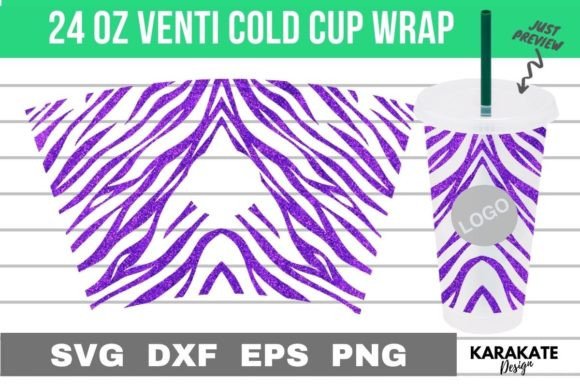
When the Tiger Print - 24oz Venti Cup Hole Wrap SVG first landed on my screen, I was bracing for something overly aggressive or cartoonish. Instead, I found a striking, organic pattern that immediately felt like a smart creative asset for a real client project. The tiger stripes are hand-drawn with a confident, imperfect line — not flat vector clipart, but something with actual texture and visual momentum. The stroke weight varies slightly, creating a sense of movement that makes the wrap feel alive even before you mock it up on a 24oz venti cup. As a designer, my first instinct is to test how a graphic design asset like this performs under pressure: does it distract, or does it elevate? For the right modern design direction, this one leans hard toward elevation.
The mood is equally exotic and approachable. The black-and-white high-contrast structure means it reads powerfully from a distance, but the organic curves keep it from feeling sterile. It’s a rare balance. I could already picture how this printable design would complement a handmade business that sells craft beverages, a boutique coffee brand, or even a seasonal tiger-themed campaign for a local café. The asset doesn’t shout; it draws you in with a rhythmic, almost tribal visual language. That’s exactly the kind of emotional appeal that makes small business branding feel intentional, not generic.
Where This Pattern Fits a Real Client Brief
Last week, I was concepting a visual identity for a small-batch cold brew company called “Wild Brew Co.” They wanted a limited-edition summer cup that felt adventurous but not juvenile. They also needed matching social media graphics, stickers, and a few accent elements for their packaging design. The Tiger Print - 24oz Venti Cup Hole Wrap SVG became the anchor. Because the wrap is pre-sized for a 24oz venti cup, it instantly solved the dimensional guesswork for the product mockup stage. I could drop it into a template, adjust the alignment, and show the client a realistic cup design in minutes.
Beyond the obvious cup application, the SVG design works as a decorative backdrop for menu boards, a hero visual on Instagram posts, and a repeating background pattern for a brand identity one-sheet. I used the PNG file with its transparent background to overlay on a kraft paper texture for a product label mockup. The high resolution 300 DPI ensured the stripes stayed crisp, even when I scaled the design up for a large poster. For a creative marketplace like Etsy, this kind of dual-purpose download — both a functional wrap and a broader graphic design asset — adds real value.
The Handcrafted Vibe That Sells Products
What struck me most was how the tiger print avoids the cliché. Many animal print assets lean into a disco ball aesthetic, but this one feels more like a modern design iteration: it could sit in a bohemian brand kit, a tropical event lineup, or even a minimalist’s idea of a bold accent. The slightly uneven linework gives it a block-printed, artisanal quality. That’s a huge plus for crafters and digital sellers who want their Cricut project or printable wall art to look handmade, not mass-produced. When I tested the DXF file in a cutting machine workflow, the cut lines were clean and the separation was logical, which matters enormously for anyone making a physical product like a sticker design or a t-shirt design.
For print-on-demand sellers, the fact that the EPS file is included means you can recolor the stripes in a vector program without losing fidelity. I tried a deep teal version for a client’s alternative option, and the pattern held its integrity perfectly. This kind of flexibility is what separates a flat clipart file from a professional design asset.
How the Pattern Performs Across Design Contexts
I tested the Tiger Print - 24oz Venti Cup Hole Wrap SVG in a series of practical scenarios to see where it truly shines and where it needs a designer’s careful eye. The results were clear: it’s a powerhouse for large-format and high-impact zones, but it demands restraint in subtle or information-dense spaces.
Where This Asset Absolutely Delivers
First, packaging details. On a cup wrap, the pattern is the hero. It wraps around the cylindrical surface and creates a 360-degree visual experience. The natural flow of the stripes guides the eye around the product, which is a subtle but powerful way to increase perceived product value. I also used it as a full-bleed background on a tote bag design, and the emotional response was immediate — it felt like a premium limited-edition drop.
Second, social media graphics. The high-contrast black-and-white makes it extremely legible on a phone screen. I layered a semi-transparent color block over part of the pattern and placed a bold sans serif font headline on top for an Instagram post, and the result was scroll-stopping. For Pinterest pins, the same technique creates a moody, editorial feel that outclicks typical stock photography.
Third, printable designs. The PNG file’s transparency and 300 DPI resolution make it ideal for a digital product bundle. I created a set of journaling cards and a framed art print using the tiger stripes as a border motif, and the output was gallery-quality. For an Etsy product, this kind of versatility is a selling point that a smart digital seller can highlight in their listing.
Where You Need to Proceed with Caution
I would be cautious about using this asset in very small-scale applications, like a tiny icon on a website or a delicate detail inside a logo design. The organic stripe spacing can become visually muddy at less than half an inch, losing the impact that makes it special. In a crowded layout with multiple competing graphics, the pattern can dominate the visual hierarchy and bury your primary message. I also found that pairing it with a highly ornate script font on a dark background created a visual tangle; the readability dipped and the overall impression felt chaotic rather than curated.
For corporate materials aimed at a conservative industry, the tiger print is too bold to blend into a minimalist branding system. I’d steer clear of using it in a professional services firm’s marketing visuals unless it’s a one-off event piece. The pattern’s strength is its personality, and that personality needs room to breathe.
Practical Design Judgments for a Client-Ready Project
Before I present any creative design asset to a client, I run a series of checks. With the Tiger Print - 24oz Venti Cup Hole Wrap SVG, these checks revealed a well-prepared file package that still requires a designer’s professional judgment.
- Black and white test: Because the asset is already monochrome, it passes this test natively. However, I did invert it for a dark background concept, and the white stripes on a dark cup maintained a completely different but equally viable mood — more nocturnal and sleek. That’s a good sign.
- Contrast on light versus dark backgrounds: The original black stripes on a transparent background work best on light or mid-tone surfaces. On a pure black cup, the pattern disappears unless you recolor it. I always advise fellow designers to test the SVG design on a light gray or cream mockup to allow the lines to pop.
- Preview at small and large sizes: At thumbnail size, the pattern becomes a textural blur, which can work for a website background if you want a subtle organic feel. At poster size, the lines looked slightly rougher than expected, but that actually added a desirable raw edge for an editorial design piece.
- Print quality: I printed a section of the PNG at 300 DPI on a matte sticker paper and a glossy cup label. The matte surface held the detail beautifully; the glossy stock slightly reflected and softened the thinnest lines, but the overall effect was still professional. For sublimation design, the vector files are the safer route to avoid any pixelation.
File Format Flexibility for a Modern Workflow
The package includes four file types: SVG, DXF, EPS, and PNG. That’s a thoughtful selection for a designer who works across Adobe Illustrator, Cricut Design Space, Canva, and print-on-demand platforms. The SVG file opened cleanly in Illustrator with properly grouped layers, which meant I could edit individual stripes without breaking the pattern. The DXF file imported smoothly into a cutting software, with no stray nodes or broken paths. The EPS file gave me full vector control for resizing and recoloring. The PNG, with its transparent background, was ready to drop directly into a Canva template for a quick social media post.
I always check the transparency of the PNG because many assets claim a transparent background but leave a faint white halo. This one was clean, even at the edge of the curved stripes. That’s a critical detail for anyone planning to layer this pattern over a colored background or a product mockup.
Font Pairings That Protect Visual Hierarchy
To test how the tiger print interacts with typography, I paired it with several font families. A bold sans serif font, like a condensed uppercase, stood up well against the dynamic stripes and created a streetwear-inspired look ideal for a t-shirt design. A clean serif font added a touch of refinement that could work for a boutique candle label. A modern handwritten font softened the animalistic edge enough for a feminine product line, while a classic script font overwhelmed the design unless I used it sparingly in a small accent size. The key lesson: the pattern is a dominant visual element, so your type needs to be confident and uncluttered to maintain a clear visual hierarchy.
Commercial Considerations for a Client Project
Before using the Tiger Print - 24oz Venti Cup Hole Wrap SVG in a commercial design, I always confirm the licensing terms. For a small business owner or a print-on-demand seller, the ability to use the asset on physical products for sale is non-negotiable. The included file formats strongly suggest the creator intended this for commercial craft use, but I reiterate the golden rule: always read the license. If the terms allow for commercial use, this asset is a cost-effective way to add an illustrated, trend-forward element to a handmade business line without commissioning a custom illustration from scratch.
For a digital seller, the pattern can be incorporated into a larger design bundle, but it’s essential to ensure you’re not reselling the raw file as a standalone. Instead, use it as a component in a more complex printable design, a packaging design template, or a curated brand identity kit. That’s the difference between a smart creative marketplace strategy and a copyright infringement risk.
Final Assessment for the Working Designer
The Tiger Print - 24oz Venti Cup Hole Wrap SVG isn’t a one-hit wonder. It’s a versatile, high-quality graphic design asset that understands its own strength: bold, organic pattern work that gives a product an immediate tactile and emotional appeal. For a client like Wild Brew Co., it solved a real visual problem — how to make a disposable cup feel like a collectible piece of branded merchandise. The asset’s texture, file flexibility, and transparent background PNG made it a seamless addition to a professional creative design workflow, from initial mockup to final print-ready file.
If you’re a designer, brand owner, or content creator looking for a tiger print that avoids the generic and pushes into the realm of handcrafted style, this is a strong candidate. Just remember to test it at scale, pair it with clean typography, and check your commercial license before you send it to a client. In the right hands, a small SVG file can become the defining visual of a whole product line.