Fish Cup Decal: A Designer's Real-Project Review
I opened the Fish Cup Decal file set on a quiet Tuesday morning, coffee in hand, with a specific project already forming in my mind. A client had asked about a coastal-themed tote bag set for her small beach boutique, and I needed something that felt playful without veering into cartoon territory. The fish motif caught my attention immediately. Not because it shouted, but because it had that rare balance of personality and restraint that makes a design actually usable across multiple product types.
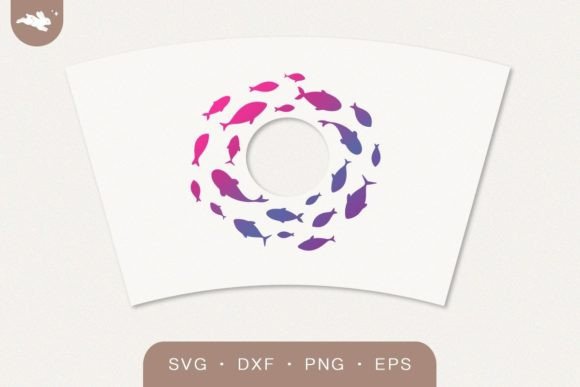
Before I go any further, let me be clear about what this file actually contains. The Fish Cup Decal comes as an SVG, a DXF, and a 300 dpi PNG. It was originally packaged with cutting machines in mind, compatible with Cricut and Silhouette systems, and scaled for a 24-ounce Venti cold cup. But if you work in embroidery like I do, you already know that a well-built vector file can be the starting point for something stitched. That is exactly how I approached this review. I looked at the Fish Cup Decal as a design asset, something I could digitize, test on fabric, and eventually offer as a finished embroidered product.
First Impression and Design Personality
The fish shape reads clearly at a glance. The lines are clean, the proportions feel intentional, and there is a subtle sense of motion in the curve of the body that keeps it from looking stiff. That matters more than you might think. When a design has even a hint of static energy, the final embroidery can look flat and lifeless, especially on textured fabrics. The Fish Cup Decal avoids that trap. It has what I would call a gentle dynamism, the kind that translates well into thread.
I also noticed the detail level is moderate. Not so complex that small satin stitches would collapse into each other, and not so simple that the design feels generic. For embroidery, this is the sweet spot. You want enough visual interest to catch a buyer's eye on a craft fair table or in an Etsy listing thumbnail, but you also need the design to stitch cleanly without constant thread breaks or registration headaches. The Fish Cup Decal sits comfortably in that middle ground.
Where This Design Naturally Belongs
I pulled up a mental catalog of products I regularly make. Tote bags came first. A simple canvas tote with the Fish Cup Decal stitched in the lower corner, maybe in a muted teal or sandy beige thread, would feel immediately coastal without screaming beach souvenir. That is the kind of product my boutique clients want. Something their customers can carry year-round, not just during vacation season.
Then I thought about kitchen towels. A set of flour sack towels with the fish design embroidered near the hem, paired with a simple running stitch border, would make a sharp gift set. Bridal shower favors, housewarming presents, even a small add-on for a seafood-themed dinner party host. The design is versatile enough to stretch across those contexts without feeling forced.
I also considered apparel. A lightweight sweatshirt with the fish centered on the chest, scaled down slightly from the original cup dimensions, could work well for a casual unisex piece. The key, as always, is testing the stitch-out on a similar fabric weight before committing to a full production run. I have learned that lesson the hard way more times than I care to admit.
Fabric and Surface Considerations
Not every design works on every surface, and the Fish Cup Decal deserves some honest thought here. On tightly woven cotton or canvas, the stitch definition should hold up beautifully. The moderate detail means the thread has room to breathe, and the shape does not rely on razor-thin lines that would disappear into a textured weave.
On stretchy fabrics, though, I would proceed with caution. If you are planning to embroider this onto a performance tee or a baby onesie, you will need a solid cutaway stabilizer and possibly a topper if the fabric has any nap. The fish shape has a few tapered sections near the tail and fins that could distort under tension if the fabric shifts during stitching. I would also avoid placing this design on heavily seamed garments where the embroidery hoop struggles to sit flat. A curved cup surface is one thing, but a curved garment seam is a different challenge entirely.
Dark fabrics present another layer of consideration. The Fish Cup Decal, depending on the thread colors you choose, may need a light fill stitch underlay to keep the design from looking muddy. I always test on a black scrap before committing to a dark garment order. The same design can look dramatically different on natural linen versus charcoal fleece, and customer expectations hinge on that contrast.
Stitching and Digitizing Thoughts
Because this is a graphic file and not a pre-digitized embroidery design, the digitizing step is entirely in your hands. That is both a freedom and a responsibility. The SVG file gives you clean paths to work with, which means you can import it into your digitizing software and start mapping stitch types without fighting messy anchor points or jagged curves. The 300 dpi PNG is also useful as a reference overlay, especially if you want to preserve the exact proportions while setting stitch angles.
I would probably use a mix of satin stitch for the main body outline and fill stitch for the interior, keeping the density moderate to avoid puckering. The eye and small fin details could be handled with a short running stitch or a light satin accent, depending on the final size. If you scale the design down significantly, those tiny details become the first thing to check. What looks charming at four inches wide can become a thread blob at two inches. I always run a scaled-down test on scrap fabric before offering a mini version of any design.
Commercial Use and Small Business Perspective
If you sell finished embroidered products, the Fish Cup Decal is the kind of design that can quietly anchor a product line. It is not trendy in a way that will feel dated by next season, and it has enough character to attract buyers who browse with their eyes. I could see this working well on tote bags, aprons, pillow covers, and even simple embroidered patches that customers can iron onto their own jackets or backpacks.
For Etsy sellers, the design has strong listing potential. Photographed on a neutral canvas tote with good natural light, the fish motif would read clearly even in a small thumbnail, which is crucial for click-through rates. I also appreciate that the design does not rely on text or puns to communicate. Visual clarity often outperforms wordy designs in competitive markets, simply because the message crosses language barriers faster.
One note on licensing. The product description does not specify commercial terms, and I never assume. Before you stitch this onto items for sale, or before you list finished products in your shop, confirm what the usage rights allow. That is basic professional hygiene, and skipping it can cause real problems down the line.
Small Details That Matter
I always check how a design holds up in black and white. The Fish Cup Decal, when viewed in a simple grayscale mockup, retains its shape identity without color cues. That is a good sign. It means the silhouette is strong enough to work as a single-color embroidery, which opens up options for tone-on-tone stitching or monochromatic product lines. A tonal white fish on a cream linen pillow cover, for instance, would feel elevated and subtle.
Thread color selection is another place where this design can flex. A natural palette of seafoam, sand, coral, and slate would emphasize the coastal theme, but a bold pop of terracotta or mustard could shift the whole mood into something more modern and graphic. I appreciate designs that do not lock me into a single aesthetic. The Fish Cup Decal gives me room to interpret, and that matters when I am building a cohesive brand look across multiple product types.
Size and Placement Reality Check
The original design is sized for a 24-ounce cup, which gives you a reference point but not a hard limit. In embroidery, you will need to decide on a finished stitch size based on your hoop capacity and the product you are decorating. A standard 4x4 hoop can handle a scaled version of this design if you keep the details manageable. For larger areas like a jacket back or a tote bag front panel, you have more room to play with thread textures and subtle detailing.
I also think about placement rhythm. On a tote bag, I would position the fish slightly off-center toward the bottom right, creating a visual weight that feels balanced without being symmetrical. On a sweatshirt, I would center it on the chest but adjust the vertical position slightly higher than dead center, which tends to look more intentional on a body in motion. These small placement decisions separate a handmade product that feels professional from one that looks like a first attempt.
Practical Designer Notes
Before you stitch the Fish Cup Decal onto anything you plan to sell or gift, run a full test on fabric that matches your final product. Check thread tension, review stitch density, and confirm that the design reads well at the intended viewing distance. Inspect the fine details under good light and from a few feet away. If the tail fin or eye detail blurs at arm's length, adjust your digitizing settings and test again.
Use the right stabilizer for your fabric weight. Cutaway for knits, tear-away for wovens, and always consider a water-soluble topper if the fabric has any texture or pile. Hoop the fabric and stabilizer together tightly, and do not rush the stitch-out. Good embroidery is as much about preparation as it is about the design itself.
If you are new to converting graphic files into embroidery, start with a simple single-color version of the Fish Cup Decal. Get comfortable with the digitizing process, test thoroughly, and then experiment with layered colors and stitch variations. The design holds up well at each level of complexity, which makes it a forgiving file to learn on.
Final Practical Take
The Fish Cup Decal is a solid graphic asset that crosses over into embroidery territory with more grace than many cutting-machine files I have tried to adapt. The SVG paths are clean, the visual personality is clear but not overwhelming, and the design fits naturally into a wide range of handmade products. I can see this working on tote bags, kitchen linens, casual apparel, and small accessories without feeling repetitive or out of place.
For embroidery designers, craft business owners, and Etsy sellers who are building a product line with a gentle coastal or nature-inspired theme, this design earns its place in the asset library. Test it on your fabric, digitize it with care, and let the fish do its quiet work on your finished products.